Ageless Birthday

I look at my pictures from fifteen years ago versus the ones of myself and I see the drastic differences. The lack of hair on top and the snow colored invasion in my beard glares obviously at me. The wrinkles have multiplied and the creases stand out harshly. My skin has the stark “old guy” leathery texture. I’m ok with getting old. I think I’ve always been over 50. I’m just growing into it lately. Women usually have a different outlook on aging. They fight it a lot harder. I’ll just leave it at that.

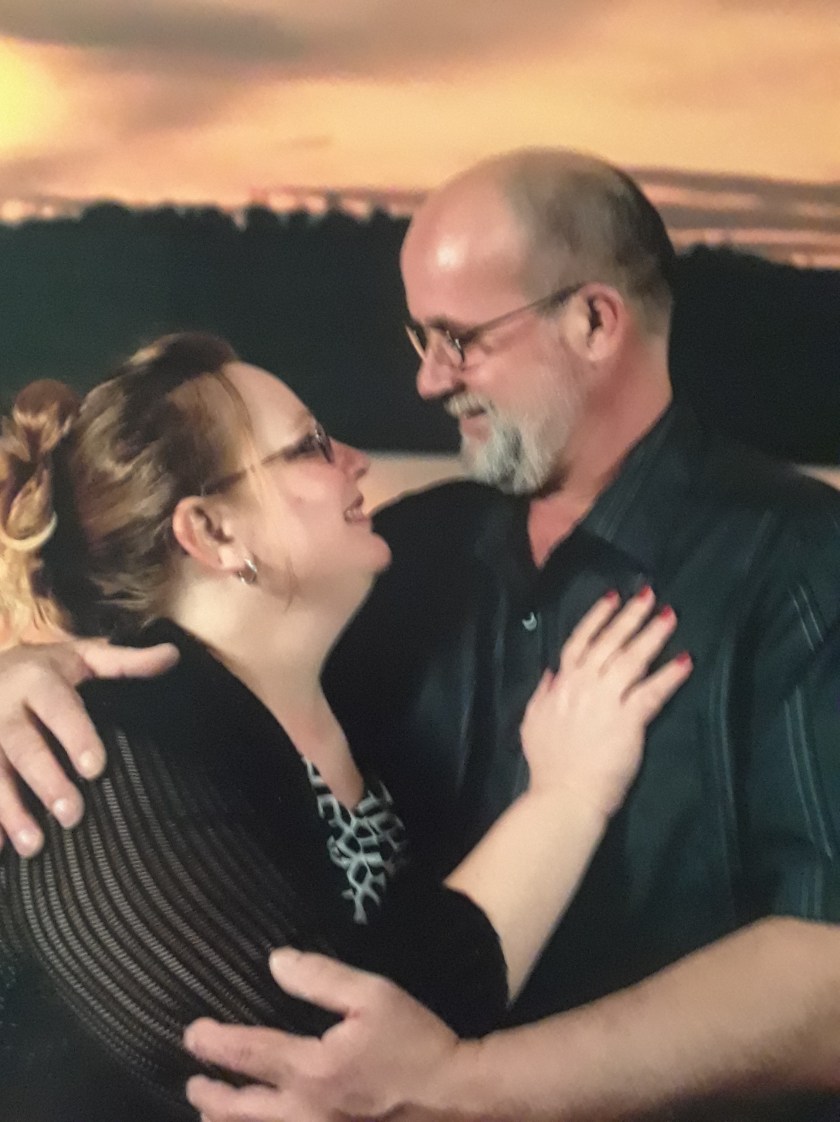
Laura Gail discovered the “Aging App” that everybody was using over the past couple of weeks. She used it on our pictures and the results were unexpectedly realistic. I could see myself looking that old. It wasn’t too awful, but I was no Sean Connery either. Laura Gail was still smokin hot, just older. When you’re 20, an aging app is a novelty. When you’re 54, it’s no longer a threat. You realize there’s very little you can do to change what you’re going to look like in 20 years. If you look at your parents at that age, you can count on getting some of that. Yeah, I know. Ouch.

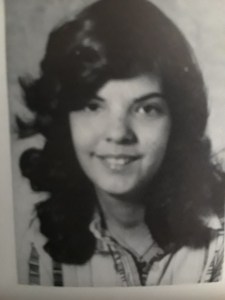
She would’ve been 54 today. Sam was a little over a month older than me. I found myself wondering what she would look like, if she were here today.  My curiosity was brief. It dawned on me quickly that it would be an exercise in futility. I felt that it would be disrespectful of my memory of her. In my mind, she will always be that skinny little girl with the pigtails in Mrs.Spiegel’s fourth grade class. I’ll keep he beautiful high school senior picture in my mind forever, with her feathered hair and delicate hands. I’ll see our wedding pictures in my memory, faded but full of her energy and excitement. She’ll forever be flowing through the rivers of my past, posing with one, or all, of our kids. Hospital pictures, school photos, camping trips, family Christmas videos and all the other holidays. I keep her images in my heart and soul. She is ageless. She hasn’t the agony of old age to suffer through. I wouldn’t rip her from the bonds of Heaven just so I can satisfy my whimsical curiosity. It wouldn’t be fair to my memory of her. I wouldn’t judge anyone else if they did something like that. I speak only of myself.

Cynthia Denise Stone taught me much of what I know about life, in her brief stay on this earth. I miss her dearly, but her lessons stay with me. She was the wife of my youth, the mother of my children, the most energetic mind I’ve ever met. Even when she wasn’t trying to, or even when I didn’t want to learn, she taught me something about life. I’ll make sure to pass them on to my kids and grandkids. She deserves to be remembered to those little ones she longed to meet, and by her kids who she longed to see grow to adulthood and beyond.

Think about the image of Sam you have in your mind. The impression she made on you. Those memories are precious. Keep her in your heart too. I think that’d make her smile. I can see her smile, and feel it, even as I wrote those words. She still makes me smile.

Happy Birthday Sam.


Small Memories of My Grandpa Johnson

I sat at the table with my Great Grampa Johnson and listened to him tell me about how to drink coffee. He had a small cup and a saucer. He explained slowly as he dribbled a small bit of his black coffee into his saucer that “it’ll cool off faster like this”. He raised the saucer to his lips and slurped it up. He didn’t spill it. He sat the saucer down with the cup in it and smiled at me, satisfied he’d passed on that bit of knowledge. I smiled back, unsure of what I’d do with the new information. I was probably about six, or seven, years old. I had at least a decade before I could even use it. I’m fifty three now and still haven’t seen the need. The real gift was the memory. That small amount of time gave me a picture of he and I, at least. I have so few of him. I wish I’d paid closer attention. I didn’t know I had so little time. He did. I’m sure of it.

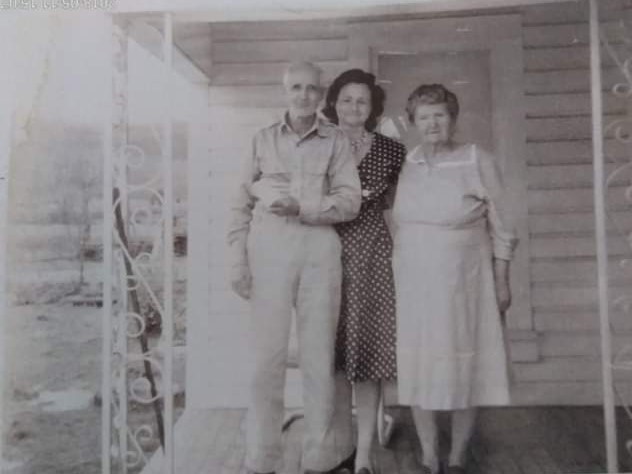
Grampa Johnson lived in Heber Springs, Arkansas with his two daughters.  He was my dad, Wayne Stone’s, grandfather. My Great Aunt’s, Aunt Opal and Aunt Jane, ran a boarding house in town, across from a city park.  The town was known for it’s spring water. Actually it’s mineral water. It’s supposed to have healing properties. The park had two access areas for mineral water. You could get it right out of a spigot inside a couple of open sided concrete and brick structures at the park. The only qualities I’m certain that the water had was the foul stench and taste. I can’t speak to the healing part, since I could never get past those two to try it. My brother and sisters and I used to go across the street to the park to play when we visited. The place was definitely old-school. The merry go round was that steel behemoth that took a long time to get to going fast, then a longer time to get to stop. I learned how to fly on that thing. First place I ever got a hangover. Didn’t even drink. I just lay down in the middle of the spinning merry go round and stared up at the sky while somebody pushed it till it everything was a blur and they couldn’t catch a handhold long enough to push. A lot of bumps, bruises and probably concussions happened on that thing. I loved it. That was real fun.

Grampa Johnson had a day bed in the front room of the house. He lounged there, spitting chewing tobacco juice into an old brass spittoon. That’s like a cuspidor, except it ain’t in a fancy place like a four star hotel, or a brothel. It always kind of amazed me that Grampa was allowed to spit in the house, even into a dedicated receptacle. My momma would never have gone for that.

I recall the screen doors in the boarding house. They were of the old, homemade variety. A long, rusty spring attached to the middle brace of the wooden door, and the other end attached to the door jam. When it opened, the creak stretched out noisily. Then rude children, like me, would let the door go like the nonchalant cowboy I was, confident that the wooden screen door would be pulled closed by the spring. It was. Loudly. That kind of thing would have irritated the crap out of me today. I guess Grampa was used to it. Or maybe he was just glad to see kids in the house. I sincerely hope I can be that loving and patient when I’m that old. Or deaf. Either would work.

My Aunt Jane and Opal canned preserves. My favorite was bread and butter pickles. Those were the best pickles I’d ever tasted before, or since. Their kitchen was big and white and full of light. At least that’s how I remember it. It made me feel comfortable. Maybe it was the food, but I think it was Aunt Jane’s big smile and kind voice that did it. Those two sisters took care of their daddy and put a lot of love into it. They were very special ladies. I wish that I’d known them better, because they were worth knowing.

That’s not a lot of memories for the Grandfather I knew. If we knew how quickly time steals people from us, we’d get to know people better. Or at least I hope we would. I’d blame it on youth, but in reflection I’m afraid that I’m not much better at spending time with my extended family now than I was then. I’m resolved to try harder. There’s a lot of people in my family that I’d love to get to know. Especially the one’s I grew up with. Let’s all do that.

I love you guys.

Always

1975

She was a skinny, lanky girl. Her long hair was set into a long pony tail down her back. Her eyes were sparkling green and full of life. She sat a t her desk, reading. She paid close attention in class. If she had a question for the teacher, she raised her hand and asked. She was not afraid. Whenever she spoke, I looked at her face. She was beautiful.

Mrs. Spiegle’s fourth grade class was my first introduction to the kids I would graduate with, far into the future, in 1983. Most of these children had lived in Turrell, Arkansas for the majority of their lives. I had not. We moved to Turrell from West Memphis, Arkansas in 1974. The year before, we’d lived in Georgia for over a year. I was born in West Memphis, and now I’d grow to adulthood just sixteen miles north of it. Turrell would become what I would forever see as my “hometown”. I would finish grade school and graduate high school here. My parents would live here for many years afterwards. I’d marry the beautiful, skinny girl that always asked questions and raise four fantastic kids with her.

When we were in fourth grade, I was (in my own mind) a bookworm (read-nerd) fat kid, with one eye. I’d lost an eye to infection when we lived in Georgia, and I had a “glass” eye. Looking back (pun intended) I see how that event in my life gave me self-esteem issues that would follow me throughout my life. I was also a tad over weight. I always thought of myself as the fat kid. It followed me for a long time. I wasted most of my youth on those two perceived handicaps. Even into my late teens, my lack of confidence stopped me from enjoying life as it should be enjoyed. The chances not taken, friends not made, and experiences not partaken of, are endless. I recall them only to remind myself that no matter how broken we are in life, perceived or real, we should live life to the fullest. That’s how I use those memories today. Not to wallow in regret, or lost chances, but to encourage myself to take each of life’s opportunities at face value. Take a chance. Take a shot. Make it count.

The girl with all the questions in Mrs. Spiegle’s fourth grade class always seemed like she was confident. She had opinions. Lots. She was the smartest person in class. Not the smartest girl, mind you. The smartest person. When she didn’t know the answer, she searched it out. She fought to find it. She asked questions, then questioned the answer until it stood up under examination. She was intimidating. And I loved her from the first day I laid eyes on her, to now.

One thing a low self-esteem does to a guy is to inhibit him from saying how he feels. Prepubescent kids are like that in general, but when you mix in a lower than normal sense of self-esteem, it can cripple a guy’s “game”. Yes, I said it. I had no game. It wasn’t until the following year, in Mr.Shepard’s fifth grade class, that I made my love known to her. I bared my soul to her in several unanswered notes. Yes, notes. Back in Medieval Times when one wanted to declare himself to the beautiful damsel, he would write flowery prose and have it delivered via a trusted friend. In the Medieval Ancient times of 1975, I sent my declarations to her, through my friend Michael True. A few notes into this declaration of my heart, I got my answer. Sam, and her friend Jolynn chased me down on the playground at recess and walloped me with purses I’m sure they’d brought to school for just that occasion. It was painful, but I definitely got her attention. I figured it was a step forward. I was wrong.

The fateful day came when I was working at my desk, oblivious to the coming onslaught of shame, and there was a knock at the classroom door. It was Sam. Mr. Shepard went to the door, and stepped out into the hallway with her. Though my heart jumped at seeing her, I had no idea it involved me. I figured the office just sent her to take something to the teacher. Not so. Mr.Shepard stuck his head back into the classroom, and called me to the door. He motioned for me to come out into the hall. When he’d closed the door behind me, and we were all three in the hallway, Mr. Shepard gave her the wind up.

“Sam has something she wants to say.” He nodded to her. She stood there with confidence, and not just a little anger and irritation, spoke to me. She continued to look at, and address, Mr. Shepard, but her words were for me.

“He won’t quit sending me notes. I don’t want him to send me any more notes. I don’t like him. I want him to stop.” The words went through my heart like a Mack truck speeding over a ripe, plump tomato. Mr. Shepard’s words to her are lost to my memory, but I know they were to the effect of “Kevin won’t write you any more notes, will you Kevin?” To which I’m sure I nodded, stunned. Satisfied that she’d made her point, Sam thanked him and left. Mr. Shepard let her walk away before addressing me, in a sympathetic voice.

“Some girls just don’t like that sort of thing. Let’s not do this again.” and we went back into the class room. My face could’ve lit the room, had it been dark. I felt as if I’d been in a horrible accident, and it’d been all my fault. My heart floated around somewhere in the bottom of my shoe.

It was my first encounter with the strength and confidence that was Cynthia Denise Williams. She left my ears ringing, though she hadn’t raised her voice. She’d shamed me into acquiescence and obedience. I didn’t cry, but it was close. My first attempt at wooing a smart, beautiful girl had ended with me in a devastated heap. It hurt like nothing I’d ever felt before. Kind of like a massive stomach ache. I stuffed my feelings deep down inside of me, close to the pain. I wrote no more notes. I still loved her, but for a dude in the fifth grade, that was some harsh stuff.

I married that beautiful skinny girl. We had four wonderful children together. From this brief glimpse into our childhood, who would’ve guessed we’d have ended up together? Not me. At the time of that story, if you would’ve told me that we would be married a short eight years later I would not have believed it. If I need to attach a moral to this story, it’s this: Love is always right. Sometimes you have to take the punches, the embarrassment and the pain to get to the part that’s worth it all. To ove is worth it. Always.

K.S.

20190218_201427
Sam Stone 1980 

A Valentine for Laura Gail

A Valentine for Laura Gail

She has a funny walk. Her feet head in opposite directions and it makes her butt do cute things. She has beautiful blondish/brown hair that’s equally attractive in a tight bun for work, fresh from the beauty shop or slicked back wet straight out of the shower. Her toes are sexily cute and short, just like her. She can sing along with all the songs on the radio, talk about work, or yell at me and it’s all music to my ears. She’s smart and funny but doesn’t know it. She’s worked hard her whole life to carry the burden of bills and raising a family,20180226_215132 alone. She’s a meticulous, detail oriented, working girl that makes the job her bitch, and makes things happen. She’s a Mom who loves her kids and wants nothing less than their success and happiness. She’s opinionated and stubborn. She’s usually right. She puts on makeup but doesn’t need it. She sees more than she lets on. She has a laugh that makes me happy. She can call bullshit by it’s name, catch a liar in his game, and still hope to give her heart to one that will hold her love dear. She gave her love to me. She gave her trust to my care. She is why I smile. She is why I sleep soundly and wake up with hope. She is the one who holds my heart. She is my Valentine.

K.S.

Strength and Honor

the-legionnaire-hans-zimmer
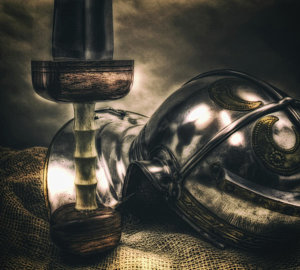
The barbarian was huge. His long, muscular build covered by an overabundance of thick black hair. He was clothed in a loose leather tunic and shod in light sandals. He wielded a scimitar-shaped broadsword at least two meters long. This he held in his right hand, with both thumbs gripping tightly to it’s pommel. In his left held a small metal shield, round and by all appearance, flimsy. The barbarian’s face was bare of body hair, but the diagonal nasal flaps below his two wide, black eyes gave the appearance of a fearsome mouth. The actual mouth was but a slender line below the slits, lip-less but entirely capable. This became obvious to anyone within a mile of the creature, as he bellowed a throaty howl to those of his clan that could still hear him.
He stood atop a small hill, in front of an earthen dike. On the other side of a fifteen meter wide canal was a forest of extremely thick trees and undergrowth. The small opening of a trail into the forest was near the dike. This trail wound into the dense thicket for miles and miles and spread into a labyrinth of covered trails that would take years to map. Into these trails the barbarian’s family and what remained of his entire village had escaped, on foot, just mere minutes ago. They were like the hairy beast, but women, children and aged. He was the last warrior among them. He howled in his guttural native tongue for them to flee, to save themselves. He howled also for them to remember this day. To someday return, and avenge him. The barbarian was their rearguard, their only insurance for survival. He knew he would not live to fight another day. He knew the aliens would soon be here to kill him. The aliens that he’d seen as black armored beasts, who fly through the air, killing his people and livestock at will. Aliens who wielded sword and sun alike to great destruction. He knew they were not gods, because he’d killed one himself in battle. They could bleed, and die, just like he could. It had taken all of his strength and will. It had been one on one fight to the death. He’d won, but he had no illusions that he’d ever survive another encounter like that one again. He knew he had one advantage over the black aliens. His goal wasn’t to survive…it was to buy time
His only regret was that he didn’t know what the aliens called themselves. In his race, a tribe’s honor was only as great as the enemy they fought. An enemy’s name was respected, honored as belonging to the whole tribe. He had no way to know that his enemy was…the Legion.
The recon scouts of the 1st Cohort of the 19th Legion (1st of the 19th) were six legionnaires, armored with the typical black kevlar body armor, and armed with both Scorpion Multi-Functional Assault Rifles and the ever-present Gladius. Their helmets bore the unique vision blocks in front of their visors, which hid the grim faces of the troopers completely. Behind them, about five kilometers, was the famed First Cohort of the 19th Legion. The planet Gracea knew this Legion well by now. In the past six months, the Legion had “pacified” over 90 percent of the small planet and the home agencies on Roma were already preparing mining and other vital resource teams to examine the rich planet. The elimination of barbarian resistance was to be “dispatched with haste”. Those were the orders from Roma. The Legate of the 19th had passed the urgency down to the troops thus: “Destroy the barbarian’s warriors within a ten-day and we’ll see Utopius on the next R and R. Any later and we’ll set up a gymnasium on the third moon of Gracia and stay here!” His humor was…unique.
The six recon troopers reached the summit of the small ridge line and halted. The “corn field” they were in negated vision to a couple of feet, and they were spread out, line abreast, about ten meters apart. Their squad leader, located roughly in the center of the line, checked his visor map. The soft green glowing lines to his lower left showed the terrain. There was a canal to their front and thick forest beyond that. The 19th was still at least thirty minutes behind them. Aerial cavalry was busy elsewhere, as usual, so it was up to recon to fix the barbarians. The leader turned on his thermal imaging and glanced right and left of him. Kneeling just below the crest were his troopers. They awaited his orders and caught their breath. Time to earn our pay, he thought. Antonio Balarus, Squad Leader-Recon, eased up to the crest and slowly raised his helmeted head. The howl came through his enhanced headphones at the same time. Hideous, but familiar, he tried to locate it. Not a problem. The big beast stood right in front of the canal bridge. A quick scan, both thermal and infra-red, told him there were no signatures nearby. Just this big, howling barbarian.
“Squad advance to within ten meters of the canal. Weapons hold…no firing unless defensive.”
Antonio stood and raised his visor. The cold wind on his face felt wonderful. He checked his troopers, all with weapons ready and alert. The howl grew louder as they approached the hairy beast.
Antonio smiled as they emerged from the field. The banks of the canal were clear for about fifteen meters on either side, and the squad emerged to form a semi-circle around the alien. The unfathomable language of the barbarian needed no translator as he pointed his huge scimitar at Antonio and his mates. The ridiculously small round shield in his other hand clashed loudly against the pommel of his sword in between gestures of pointing and howling. Obviously a challenge.
“Bella, drop back to the crest and inform the 19th that the barbarians have entered the forest. We’ll wait here until they get here. Tell them we may have a live prisoner to interrogate, and to have special services ready to receive him.”
“Aye, Antonio.” The troopers backed slowly away, and the remaining troopers spread out the circle to keep the barbarian from escaping. That, Antonio thought, was unlikely. This fellow was the doorman. Antonio had seen it a couple of times already. A sacrificial rear guard to buy the rest of the clan time to escape. An admirable quality in any race, he thought. Futile, but admirable.
Antonio gave orders and gestured to his squad to keep the barbarian at bay, but not to fire unless he charged or took offensive action. The Gracian watched this, even as he continued his own gestures. He understood the significance. He pointed his sword directly at Antonio, and held it there. He began a low, growling sound. It was almost a conversational tone. Occasionally he would softly touch his shield to the pommel, but now he was completely focused on Antonio.
“You lead. Come to me. I lead. I will kill you, black man from the sky. Your blood will be mine, and I will rest in C’rombor with my father and brother. Come to me” were the words of Melokar the Gracian. Antonio would never know his name, nor Melokar Antonio’s. Here and now, however, Antonio understood the beast’s tone and intentions, and he smiled once again. A challenge. The legionnaire loved a challenge.
“The barbarian asks me for a fight, my friends.” Antonio informed his men. The troopers glanced sidelong at Antonio, incredulous. They knew what their leader was about to do.
“Antonio, don’t. Tacitus will have your head. If you damage your prisoner, he’ll have you cleaning out toilets shipboard indefinitely.”
“Rosca, this noble beast asks me for a noble death. Can I deny him?” Antonio clicked his Scorpion to his right thigh, in it’s holster. His eyes locked onto Melokar’s and he held his empty gloved palms in front of him for his enemy to see. Melokar held his sword rock-still, pointed still at Antonio, and grunted an accepting response. Antonio waited a second. He’d hoped the beast would charge his weaponless foe, but this fellow wasn’t stupid. So he reached slowly with his right hand to the pommel of his gladius, sheathed tightly on his left thigh.
“Don’t do this Antonio. You’ll get us all in trouble.” Rosca again.
Antonio ignored him as he drew his short sword in one swift, smooth motion. The small, thin-lipped smile under Melokar’s nasal slits went unnoticed by Antonio as the alien stepped one stride towards the trooper. For Antonio and Melokar, this was an exercise of honor and strength. They both accepted whatever the outcome. There was a difference, a major one, however. Melokar knew that his priorities were to buy time for his people and to inflict loss upon his enemies. For Antonio, this was a show of personal courage and strength…personal honor. The besting of this great beast would prove to himself that Antonio Belarus commanded the squad by strength and honor alone. Melokar didn’t care about Antonio’s honor, nor Antonio about Melokar’s. They each were satisfied with the knowledge that the other had possession of that spirit that drives a warrior on any world. Each for his own reasons. Antonio gave little thought to this as he edged slightly closer to Melokar, waiting for the challenger to spend the first blow. He didn’t have to wait long.
At Antonio’s first step, Melokar turned towards the bridge. For a split second the trooper thought he would make a run for it. He was about to command Rosca to take him down, but then the beast stopped and turned full circle. The scimitar blurring towards the soldier before him. It’s full length of two meters, plus the long arm of Melokar, put the blade at just inside a killing range blow, and instantly Antonio ducked and pulled his gadius back against his ear for a mid-section swing. The swirling Melokar, however, continued his turn and slung the small “shield” with surprising swiftness. Antonio sensed, rather than saw, the shiny round projectile fly past his head. The deadly frisbee made for it’s target up on the crest, fifteen meterrs away. Bella screamed over Antonio’s earphone as it smashed his visor, then sliced an enduring, if not fatal, scar deep into his right cheek, then splitting the bridge of his nose in two before it spent it’s energy.
Antonio took advantage of Melokar’s sweeping turn to lunge out with a right to left sweep with his gadius, trying to gut the beast. The shorter sword of the legionnaire wasn’t up to the task, and missed by about two inches. It took crude tunic and some hair from Melokar’s belly, but no flesh. Melokar finished his turn and lighted again on Antonio’s gaze. Their eyes met for a second. With a hideous howl on Melokar’s lips, the Gracian charged at Antonio, bringing his huge scimitar up above his head for a downward cleaving blow. Antonio, still in a defensive crouch, sprang forward, straight at Melokar. He brought his gladius up from waist level, point forward, both hands on the pommel, and plunged it into Melokar’s belly. Even as the short sword dealt the blow, Antonio rolled to his right, dodging the expected stab downwards of the alien scimitar. It did not come. Instead, Melokar slung his blade towards the trooper to his right. Bella took the middle of the blade full into his right bicep. It creased the composite armor and slashed through the muscle of Bella’s arm quite painfully.
Bella’s pain, though intense, was nothing compared to what Melokar now felt, as Antonio pulled the gadius out of his stomach with ruthless efficiency and not a little anger. Unarmed, but still standing, Melokar clutched his entrails as they escaped his midsection in a bloody mess and howled. Antonio stood fully before him and their eyes met one final time. Before Melokar the Gracian made his last step towards Antonio with outstretched hand. Andtonio had no desire to be throttled in the death grip of this ferocious alien. He slashed Melokar’s hand off at the forearm in one deft move, then reset himself into a striking stance. In an instance, Melokar’s still howling head was separated from it’s host in the familiar violence of the sword.
Antonio looked around him. He re-evaluated himself as an idiot instantly. Two men down and wounded, though thankfully not dead. Bella with a crippled arm and Rosca’s face pouring blood like a sieve. Antonio didn’t even have so much as a scratch. He’d violated every precept of command by allowing a desire for personal honor and recognition to supersede the safety of his men. The remaining three men of the squad looked at him for a second, neither in awe nor scorn. Then they began to give aide to their fellow soldiers. They ignored Antonio, and gave him a bit of room. The men of the Legion gave men of strength and honor respect and, at times, command over them. The one unbreakable, yet unwritten, rule of the Legion had been broken, however. The honor of the Legion is always first, and you don’t honor the Legion by being careless with it’s troopers. The squad would say nothing of it until their debrief with the Centurion. Among themselves, or to Antonio. Not one of the squad had any doubts that, after the debrief, Antonio Belarus would command no man of the 19th Legion ever again. Personal honor be damned.


P.S.

Tell me what you think of the Legionnaires of this alternate history, and their world conquering Legions…

K.S.

To The Republic

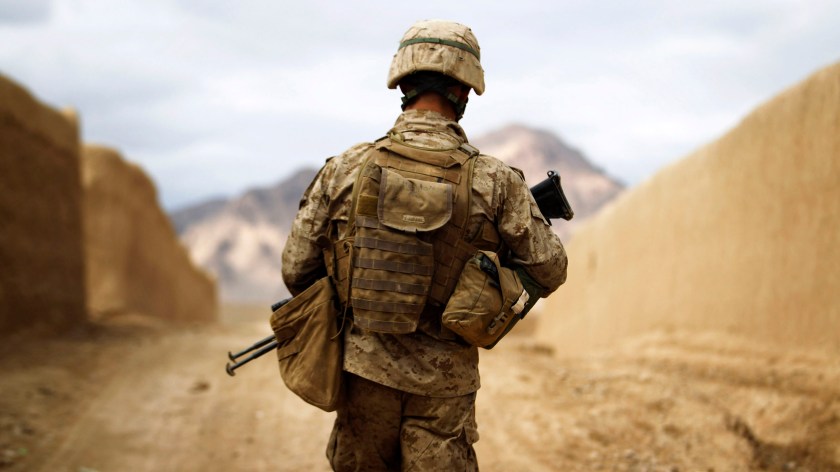
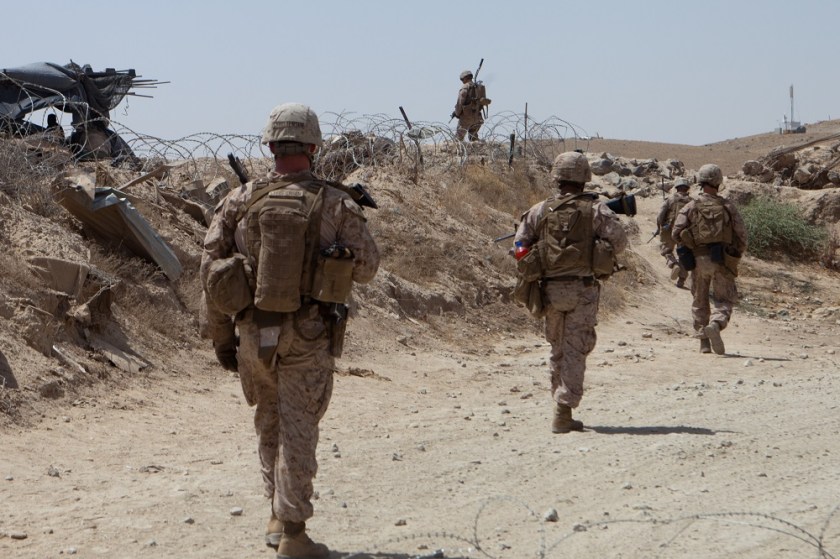
U.S. Marine patrols in southern Afghanistan's Helmand provincePrelude Part Two

The minutes ticked by till they passed the hour mark. Wallace didn’t hear most of the conversation, as the old men, Americans, and the translator bantered about with talk of trees, community needs, and unemployment. It wasn’t until he heard one of the civilians get loud that he realized the talk wasn’t going well.
“Well, keep your goddamn trees, then! Keep selling to terrorists and you’ll never get this god-forsaken shit hole out of the middle-ages!” That caused quite a flurry of chatter between the Afghani translator and the mullah, with the Captain trying to desperately do damage control. It’s not polite to use Allah’s name in such a manner, especially in a mullahs own home. Not polite at all.
They came out of the hut with the officer still trying to tell the translator to tell the mullah what the man had MEANT to say. The translator ignored him. Wallace watched as they came out and counted heads. Eight villagers had gone in, only seven came out. He stole a glance inside. One middle-aged man sat cross-legged on the floor rug with a cell phone in his hand. The man looked up, gave Wallace an innocent look and a nod, as he quickly put the phone under the folds of his robe. Shit. Wallace turned back to his Captain and strode over to lean in close so the officer would pay attention.
“Sir. Man inside just got off his cell phone. I think it’s time to go.” Wallace didn’t wait for a response, and started giving his squad orders to get ready to move.
“And get your Kevlar back on.” He said, as he pulled his K-pot off his hip, where it’d been dangling since the officer had given the “hearts and minds” order. Trying to watch his men, get the Captain moving, and keep his weapon at the ready, he dropped his helmet. As he knelt down to retrieve it, a barrage of fire rang out from above. What seemed like a hammer hit him just under his right ear, and he tumbled over, into the dirt. The Captain grabbed Wallace by his IBA collar and drug him into the hut’s doorway as the squad found cover and returned fire up the hill. The lone gunman had emptied a thirty round clip and had stopped firing about the same time the squad started their suppressing fire downrange. Nobody had a target.
“Cease fire!” the officer yelled when it was apparent they weren’t taking any more rounds.
“Anybody got eyes on a target?” No response.
“Then get doc over here and check out Wallace! He’s bleeding.”The medic pulled out a bandage poured a little water on the wound to wash the blood away so he could see it. There was only an inch or two graze near the bottom of the skull, and where his earlobe had been, just a jagged and bloody pulp. The medic pressed the bandage against the graze and started taping up the ear. Wallace felt like he had a massive headache and his ear throbbed like the devil, but he could still hear, despite the burning sensation as the doc patched him up.
“Hurry up, doc. We need to leave.” The squad was ready. The Captain was shouting orders to a private to follow him inside the hut. They drug out the man Wallace had seen with the cell phone and the officer stood by as the soldier searched him. No phone. He ditched it already. Figures. The elders had scattered with the first round, leaving the man to his fate. They had no need to fear. The soldiers had no evidence to prove the man had called anyone, so he was released. Hearts and minds.
They walked down the trail, past the edge of the village, every man alert and on edge. The contractors were scared shitless, and the Captain was quiet. Everyone expected the worst. Mortars or snipers or something. It didn’t happen. On the way down, they radioed the Geek.
“Warrior Three, this is Two. Received fire, one wia, but mobile. We’re coming your way. Be alert. Two over.” The Captain didn’t waste words.
“Affirmative Two. We heard it. Come home. Three out.” The squad with the vehicles breathed a tad bit easier.
The ride back seemed to take forever, instead of the twenty minutes it actually was. They all assumed an IED or mortar attack would follow them back to the outpost. Nerves were on edge. The small talk was at a minimum. Wallace sat in the lead truck, his Kevlar jammed onto his head, with the bandage bunched up under it. It hurt like hell, but he didn’t care. With every bump on the road, the helmet rattled his head and made his ear sting. Even with the pain, all he could think of on the way back was

‘Fuck their hearts and minds.’


To The Republic

Lima Company comes full circle in Now Zad: Marines reflect on progress, sacrificesPrelude

Humanity crossed into the twenty-first century dragging all the ancient baggage it had carried into every other one in the past. Mankind’s propensity for dissent and hatred has not changed. So long as our will to be right exists, there will ever exist a willingness for some to do violence upon those we see as wrong, evil, or just plain different. It’s the story of Cain and Able on a global stage. No matter the manner of the conflict; nationalistic, economic, religious, geographic, or racial issues have all been blamed for why we choose to murder our fellow man on both a small and a large scale. Regardless of the many enlightened detractors of the failure of war to solve our problems and disputes, it continues to be a very popular solution. For better or worse, termination of the opposition does tend to put our problems into at least a different perspective. The catch is that killing usually perpetuates more killing. The solution generally creates as many problems as it solves. The larger the scale of slaughter, the more we strip away our humanity and reveal the dark, and sinister, nature that man tries so hard to pretend doesn’t exist. We may fight for a righteous cause, for a noble end, and in defense of the weak, but, in the end, we find ourselves with a generation of men that are simply very good at killing.
Afghanistan 2005
“Get your goddamn head down, Wallace!” the corporal said, as he jerked the young private down below the hesco barrier. As he did, a second sniper round cracked overhead.
“See that, you dumb sonofabitch?” The twenty-two year old Wallace had his first taste of hostile fire. The only thing going through his mind was that the corporal may have thought he was stupid for not taking cover after the first round was fired. He realized then and there that being scared was ok, but being stupid definitely was not.
“This outpost takes fire every day, so you’d better get used to it. The hescos are lined up between us and that tall razorback ridge to the east.” He jabbed a thumb in the general direction. “They hike up the slope from the other side, pick up an AK or an old enfield from a lil ole cache and just lay down and wait for a good target. Most of the time they don’t hit nothing. Every now and then they get lucky.”
“Are we sending out patrols, or maybe a drone, to find him?” Wallace asked.
The seasoned corp grinned with just a touch of humor.
“That ridge is bout a half-days walk from here, boy. Don’t get drones this far out very often, either. That dude will either be smart and lay low for the rest of the day, or Smitty’ll take him out with the Barrett when he gets a bead on him-if he’s dumb enough to fire a couple more times. There’s a hamlet less than fifty meters from the top of the ridge, so we can’t fire arty, or even mortars, unless we have to. We is the good guys, after all. Ya know?” The sarcastic grin belied the mans sincerity.
William Lee Wallace sat with his back to the hesco and looked around at what would be his new home for the next year. Outpost Shelby was a dusty, tan and brown pimple on Hill 729. With six bunkers, a small helo pad, and a company of 125 infantrymen, it looked depressingly unimpressive. The bunkers appeared to be reinforced holes in the ground (they were), and the surrounding hills loomed over them in every direction. He didn’t have to be a tactical genius to realize that they could get shot at from justabout any direction. Thankfully, Hill 729 wasn’t an easy mole hill to climb either. An assault on their position would require a fairly large number of dedicated men, not afraid to die for their cause. The fields of fire were clear to the base of the hill, which was good. That also meant the enemy could observe the patrols leaving and returning from Shelby too, however. Not so good.
A single fifty-caliber ‘boom’ caused Wallace to jump. It came from the bunker to his right.
“That’d be Smitty. Maybe he got his number six. Hey! You get him?” he shouted.
“Not sure yet, Geek. Why don’t you have the new guy stand up and take a look?”
“Fuck you!” Wallace immediately answered, bringing a sincere smile to the corporal.
“Come on, man. Lets get you squared away. You just might have some sense after all”
Over the next ten months Wallace learned a lot. The small lessons were just as important as the big ones. How much water to take on patrol. How to tell the difference between close and simply near rounds incoming by the sound of its passing. He could tell what was firing and from which direction just by the sound of it, too. He learned how hard terrain was on the human body, and was amazed at the endurance he was capable of as he walked the trails and slopes of every ridge in the surrounding ranges. He knew how to find cover when fired upon, and discovered what it took to raise up in the midst of it to return that fire. Hot, running water is a gift from God. Not to have a clean, working weapon is an unforgivable sin. Body armor is both your best friend, and your worst enemy. The important lessons, the big ones, were more about people and their nature. Different cultures have different values. Corruption is not always looked down upon, if you’re the one who is corrupt. People hate you sometimes, regardless of your motives. Sometimes people will smile at you, nod in agreement, and later try to kill you. Being paranoid is essential in combat, because they ARE out to get you. Naiveté is not an endearing trait in a combat zone. The Corp’s job is to kill people and break things, never mind what the politicians and generals say.
After ten months at Outpost Shelby, Wallace had been shot at more times than he could remember. The occurrences that stood out were the seven times when one of his own were killed. Twenty three other times he could recall who was wounded, and how. Two very distinct recollections were of his own initiation into the Purple Heart Club. The mortar fragment in his right calf barely rated a bandage, but the AK round that took off his right earlobe. It’d sound funny later, but not just yet. Wallace learned how bad strategies cannot be fixed tactically. Safe havens for the enemy, less than two days walk from the border, was stupid. Not having enough translators with the combat units was stupid. Having the army act as benefactors for local economies doesn’t work. You cannot change tribal hatred and religious zeal by being rational and nice. That’s how you lose an earlobe.
It was a hot day in mid-July and the heat was oppressive, to say the least. Wallace had his own squad and was tasked with escorting the Captain, and a few contractors, to a small hamlet over on West Wall ridge. The town basically sprouted out of the mountains bare cliffs to the west of Shelby, hence the ridges nickname. You had to leave the vehicles about 150 meters from the hamlet, because that’s basically where the road disappeared. They almost never had any problems with the place, mainly because it was even more isolated than most populated areas in the valley. There were only about 300 people, all told. They made a living cutting down the huge cypress trees, dragging them down hill, by hand, and transporting them via river to buyers on the black market downstream. The mission, as he was briefed, was to take the Captain and his civilian group, up the hill, where the contractors would negotiate with the tribal elders for a legitimate contract to buy their raw lumber. The civilians had gotten permission from the government to circumvent the “ban” on cypress sales for the expressed purpose of “gaining local trust” in the new government. The elders’ position was that the ban had actually been good for their hamlet, since few people came up their way to enforce it and that kept the asking price way up. Besides, they ignored the ban anyway.
The convoy set out with two gun trucks and a humvee, just enough for two squads and the command group, and made the road trip in less than twenty minutes. The road ended at a tiny bend in the road that was barely wider than a goat trail. They dismounted and left Corporal Geek and his squad to guard the vehicles, while Wallace took the Captain up the trail with his squad. With rocky slopes to their left and a 45 degree climb to their right, they chugged slowly up to the hamlet. Thirty minutes later, they huffed into the village. The young private positioned his men, as they walked, with short, terse words and a quick gesture of his hand. They already knew the routine by heart. No one in the squad had been in-country less than six months, and they knew their jobs intimately. A small group of elders emerged from an adobe and brick hut to meet them. Wallace held up a clenched fist and the squad stopped, on the alert, eyes out.
The Captain shook the old mullah’s hand and gave him a lame-sounding Allah-akbar greeting. The old man nodded slightly and led the four men into his home to talk and have tea. The ancient mountain-folk had all the time in the world, and dearly loved wasting copious amounts of time talking and sipping tea. Wallace waited outside with his squad in a perimeter around the mullah’s home, watching and scanning for danger. There were a few villagers here and there, rubber-neckers checking out the infidels. A couple of kids bugged a private for candy or any other goodies, but, generally, the Afghans simply ignored the Americans and went about their business as usual. Wallace scanned the village, but didn’t notice anything out of the ordinary. Then the Captain unstrapped his helmet and took it off, grinning.
“Private, have your men take their helmets and shades off.” He said, still smiling.
“Sir….what?” Wallace didn’t understand such an obviously stupid order.
“I learned in Iraq that when we patrolled we would go without headgear, or shades, when we wanted to express our peaceful intent. You know, hearts and minds and all that. Worked pretty good, too. They learned to trust us when they could related better to us. Hard to look a man in his eyes when he’s wearing shades and Kevlar.” He explained.
“Sir, I…”
“Just do it, Private.” The Captain said. “Sir.” Was all the response needed. He passed the word and the squad reluctantly bared their heads and took off their shades. The Afghanis smiled and pointed at them approvingly. The old mullah ushered the captain and contractors into the hut for tea and small talk to begin their negotiations.
“Willy, what the fuck?” A young private named Bose asked after the officer left.
“We’re winning their hearts and minds, bubba.” A sarcastic grin followed.
“I’d rather keep my damn head unventilated, man. Fuck their hearts and minds.”
“I hear ya. Me too.”


To be continued…..

Nanny Tales Part Three

(what do you remember about me-kevin-losing my eye?)

“A whole lot. Before we moved to Georgia, you were going to Central (school). I’d had your eyes tested. The doctor there, I can’t remember his name, said that you had a “lazy” right eye. He put a patch on it. Then, after we moved to Georgia, you’d been having bad headaches. You came home from school one day and said “Momma, when I do this, I can’t see nothing” (covering my right eye). It scared me, and I called Wayne. I called up to the eye doctor, and I took you up there. He examined you and said “he’s totally blind” (in the right eye). I called Wayne. Anyway, he sent us to a specialist over in Columbus, GA. The big children’s hospital. We went over there to the eye doctor and they did tests, and stuff. He called us back there to look at the tests. It looked like “sand” behind your eye. He said it was infection. He said we could have it taken out, or there might could be a transplant. So, Shirley Hall, the secretary at the truck stop Wayne worked at, her and her husband belonged to the Lion’s Club. She checked into it, and she could get us an eye. Get you an eye. When the doctors got in there, they said it (infection) had eaten through the nerves, and stuff. They couldn’t transplant. So, you had surgery in Columbus, GA. (the surgery) took a couple of hours. You went in one day and they did it the next day. You was over there about a week. Your Aunt Mary and Uncle Claude drove down there. We lived in LaGrange. (The house on the hill) We moved from there (LaGrange) to Buford, GA. (The house in LaGrange) was a new house, but it only had two bedrooms. Their bedroom (the kids) was big enough to put a full bed for the boys and bunk beds for the boys.

(what happened the night the pigs got loose?)

It was in the day time. Joe was gonna help. They took off across the field. They got out. (the pigs) I noticed they got out. You’re supposed to go around and get behind (them). But Joe would chase them. (laughs) There I was trying to get around them, and Joe was chasing them. I had to holler at him. We got them back in, though.

Ronnie Brown was working for Dad at the truck stop. After the horses had penned me in the feed house. Every time I’d open the door, he’d (the horse) would kick it shut. I went out there the next day or so, to feed them. (horses) I saw this snake. I called Wayne, and they come in from the truck stop and started pulling the feed sacks out, where they’d throwed them in there. There was a nest of rattlers.

(what about the time the drunk came to the door?)

Dad was gone to the truck stop. It was midnight and somebody kept rattling the screen door on the screened-in back porch. Of course there was a door into the house, I had locked. I took all you kids in the bedroom. I told you to stay in there, and I got the gun. I opened the wooden door and I’d ask him “what do you want?” (he said) “I need somebody to take me to town” I said “there ain’t nobody here to take you to town. You need to go on!” He just kept trying to get that door open. I finally told him “if you don’t go on, I got a gun.” He left and went up to the neighbor’s house. I had no idea who this (the drunk) was. Come to find out, I didn’t know him, but he was a neighbor (from) down the road. Wasn’t very far, but he was wanting to go to town.

(when mary ann got sick, at school)

It was the last day of school. When she came home, I always watched from you to come off the bus. When you come up the lane there to the house. Pam was holding on to Mary Ann. When I went out there, she had 104 temperature. And I said “why didn’t you call me to come get you?” She said “he wouldn’t let me” The principle wouldn’t. I called Wayne and told him and he went out there to talk to the principle. The principle pointed his finger at him and told him “this is my schools, I’ll run it the way I see fit” and Wayne backhanded him. He was in a swivel chair and knocked him over backwards. Wayne went on back to work. He called me and said “if the sheriff comes looking for me, I’m at work.” I said “what did you do?” and he told me. Never did hear nothing about it.

We had a lot of things happen. Like when yall were in high school, at Turrell, and Wayne was running chains. (at a football game) (laughs) And another drunk (laughs). He hauled off and hit a guy there. (kevin- ‘he always told me that was the most embarrassed he’d ever been.) Yeah, he was ready to go home. He wouldn’t even stay for the chili supper. (kevin-”i remember that, because I was standing on the sidelines. It was my “coming up” year. The end of my tenth grade year.) Everybody else was proud of him. (kevin-we were too! When I was standing over there, I didn’t know what had happened. All of a sudden there was a cluster of people over there) I remember Tommy Chandler was sitting up there by us. (in the bleachers) I said “who in the world?” Cause I didn’t see him hit him. I said “what’s going on?” and Tommy said “he just hit that guy” and I said “who?” “your husband!” I said “Oh gosh.” (dad said the guy had been bad mouthing our team all night, following the chain gang. Drunk. And finally said something about that “so and so quarterback” and he turned around and hit him.

You’re Dad had a temper. He didn’t control it too good, sometimes. (kevin-No. But he had the size to back it up.) It’s a good thing he did.”

This was the end of the original interview. It took place at least eight years ago. I will be doing a new interview very soon. I will include new pictures and will also conduct it on video, which I will have to post separately. Look for it on YouTube.

Mary Belle Growing Up

I went through the tenth grade, and started in the 11th, and quit. (Why?) Stupid, for one thing, but I decided I needed to go to work. Mom and Dad had a tough time. It was an excuse, I’m sure. They would’ve made it somehow. I didn’t go to work to help them. I went to work because I wanted this and that. I wanted to be on my own. I couldn’t wait til I was eighteen. You’d have had to known me as a kid. (I think I did. *I referred to Candice. She laughed) When I quit school, I thought I knew it all. I thought I could do anything. I had these big ideas about getting a job, getting my own place. I already had my own car.

I got my first car when I was sixteen. Daddy bought me a 47 Pontiac. I drove it for a year, then the reverse when out in it. It was an automatic. I still drove it quite a while. I’d have to get out and open the hood and put it in reverse. I tried not to get where I have to back up much. I decided I wanted another car. It was before I was eighteen. Dad said we could trade that one in on another one. Mom didn’t want him to get the first one. But anyway, we went and traded it in. It was a 51 or 52 Chevrolet. A little coupe. I was still driving it when me and Wayne got married. He had a car, so I gave that one to Mom. She went to sell it, then Wayne bought it back.

(who were your running buddies in high school?)

Deanna, Betty Floyd, Susie Davis, (and) Joyce Cook.

(what kind of things did yall do for fun?)

They had a donkey ball game during basketball season. The buses ran then, so we’d all meet up at school. Mom and Dad always told me I couldn’t date til I was eighteen. We liked to go roller skating. All of us would stay at one’s house. Each time at a different house. We jumped rope. Jumped the board. (?) That’s when you get a cinder block, and put a two by six, or eight, on it. Then one person would stand on it and the other would “boomp!” jump on the other end. We’d play walk the barrel.

I had one dog. Mom and Dad got him when I was real little. He lived for ten years. He was a miniature collie. His name was Pooch. He died when I was, I don’t know, I was probably in the eighth grade. We lived out in the country and dogs just roamed. Some other dogs got a hold of him and tore him up. He made it back home. We had him on the front porch. Before we opened the door, we had to carry him in the house.

I had a pet chicken. Mom and them raised chickens, for the eggs and all. I don’t know how I ended up with this little chicken, but it’d ride on the handle bars of my bicycle. I don’t remember it’s name, but it stayed outside. It didn’t get to come in the house. Everywhere I went, that chicken went. I I don’t know, but they had it for years. I remember when her husband died, I was probably in sixth or seventh grade. I’d come home from school and do my homework and stuff, then I’d go down there and walked everywhere.

Granny Mittendorf lived down the road and behind us, on another little dirt road. I’d walk down there. She was Claude’s Wife’s, Mary Ferguson, Mom. She was real old. Or, she was to me when I was a kid. She lived by herself. She had that, I don’t know what they called it, shaking disease (Parkinsons?) I don’t know, but they had it for years. I remember when her husband died, I was probably in sixth or seventh grade. I’d come home from school and do my homework and stuff, then I’d go down there and spend the night with her so she wouldn’t have to stay by herself.

(Who was Mrs. Fletcher?)

They moved from Gosnel Missouri when we were like in the seventh grade and they were our neighbors. That’s how I got acquainted with them. They were just our neighbors. Their daughter and me run around together before we quit school. (the daughter would be…?) Jeanette Fletcher Stone. (She married Cletus Stone) Cletus was just sixteen when we got married. By then Jeanette went to St.Louis to work. She had two kids. Jeanette was two and a half years younger than me.

If you want to go back to, as a teenager, I thought I knew everything and was gonna do this, and I was gonna do that. That why I say, in those ways, Candy reminds me of me a lot. She’s determined. (Hard headed?)  She don’t want to admit (she’s wrong). Back then, I couldn’t say I was wrong, or admit I was wrong. ‘I’d show you’, you know? I was a smart-alack, was what I was. I couldn’t see it, but then, after I got married I growed up, I guess.

(Did you have any nicknames growing up?)

Yes. As a teenager, when I worked all weekend, restaurant work, and I was a cashier most of the time. It was at a truck stop, and they’d call me “shorty” and “half-pint”. Of course you know what my mom called me? (laughs….’no, what?’) My Momma used to call me “Shit Head”. (laughs) I had forgotten about that. Well, one night we saw a rat in the house. We saw it run under the couch. I went and got the broom. She’d told me to go get the broom. I went and got it. (When I got back) she was bent over, looking under the couch to see if that rat was there, and I goosed her with it (the broom). And she said “you little Shit Head!”. (laughs) She didn’t make it (the name) an everyday habit, but I WAS bad about aggravating her. (I didn’t get away with it) so much with Mom, as I did with Dad. He’d grab me and run if she started to spank me, when I was little girl. He never laid a hand on me. As a teenager, when I got my smart mouth, he kindly put a stop to that. He told me that he’d slap me across the room one day, when I said something smart to Mom. So I never did too much of that around him.

On that question you asked me about who taught me how to drive:

Louise and Willard. Willard had an old car. It was a forty-something model, and he let me drive it, with him in it. I can remember the first time I ever went anywhere by myself, driving. It was before I had a license. It was me and Deanna. We were at the house, one Sunday afternoon. We were wanting to go riding. We were probably fourteen, or fifteen. We were wanting to just go somewhere, go somewhere! We were bored! We wanted to do something! Did ya ever hear that before?! Willard said “here! Take the keys and go!” I said ‘are you serious?’ and he said ‘Yeah’. He was like a big brother to me. So, he just threw me the keys. I said ‘I ain’t ever drove by myself!’ he said ‘you’ve been driving, you can do it.’ So we went down Granny Mittendorf’s road and right past her house was a big old wooden bridge. We lived on Highway Fifty One and had to drive down to Fletcher’s, three or four houses, then go back. They had an old bridge right past Granny Mittendorf’s house, and it didn’t have no side’s on it. It was an old plank farm bridge and Deanna said ‘I wanna get out and walk’. (laughs) She didn’t trust my driving. She got out, and the silly thing, when I started across there, I was going real slow. She walked right behind the car, so if it (the bridge) fell in. She was scared of the bridge was what it was. If it’d fell in, she’d have still went in (the ditch) cause she was right behind the car. We had a big laugh about that. We went riding all back in the country roads and come back home. Everybody kinda give in to me, cause I was the youngest. If I wanted to do something, I usually got to do it.

Mary Belle’s Story

Several years ago, I bought a micro cassette tape recorder to help me take audio notes and record interviews to assist me in writing. It sat in my dad’s (now mine) old briefcase for many years. I had good intentions to use it, and I did. Twice. Eight, or nine, years ago I interviewed my mother, Mary Belle Stone, with the intention of writing a family history. Two years ago I taped an interview with the late Mr. Truman Masters, a professional addiction counselor. I had the honor of writing an article for Alternative Choices Counseling Center’s Newsletter about him. The word intention denotes useful synonyms such as “purpose, goal, and end”. I achieved none of those. I discovered that it was easier to buy a tape recorder than to write. Good intentions notwithstanding, if you don’t sit down and write the damned thing, it doesn’t matter how many apps, programs and gadgets you have, nothing will get written. So let’s change that today.

I recorded about an hour of Nanny (Mary Belle’s secret identity) talking about her life and family, then promptly let the dust settle on it while it sat in that briefcase. Then it happened. This year I wrote stuff. I actually put my actions where my intentions were and put a bunch of sentences together. I wrote an essay for a nursing home trade organization that won third place. One hundred and fifty bucks later I realized that maybe, just maybe, I should take my own advice (I harped on this to my kids their entire life) and follow my dreams. I started a blog. I’m writing. Not as much, or as regularly, as I should, but I AM writing.

I started a blog on a free writer’s site (this one, in fact) and have several blog entries. I even have a rather long short story that I serialized. (I’m still working on my editing skills). Seeing my own words in print have encouraged me to no end. I’ll continue. Hopefully, I will improve. Definitely, I will keep trying.

I dug out the tape recorder a couple of weeks ago. It’s obsolete but still in great condition. Heck, it should be since it’s only been used twice. The audio has a lot of background “hum” to it. That’s normal for the old tech. It was entirely usable, though. My Mom’s voice came through clearly, for the most part, and I had the opportunity to re-live that afternoon in her living room, listening to her stories and asking questions. It was awesome. I decided to start transcribing the audio, to use as the basis for a blog entry, or several entries. I found that transcription ain’t as easy as you’d think. There was a lot of “stop and go” listening. A lot of cues and rewinds. It was tedious, but I knew it would be worth it. I downloaded the audio to my computer, and to a memory device. Then I sat down to write the article. After a few false starts, I realized that Mary Belle told her own story pretty well. Although I may be coping out a bit, I decided to merely tweek the transcription a bit and publish it, as is. I will reach out to my tech support guys (that’s Micheal Stone and Cody Bishop-Hi guys!) in the future and figure out the best way to post the actual interview on here. There will be more than one post for Nanny”s Story. She has had quite a life. I think hearing about a person’s life in the first person is one of the greatest ways to know their story. Since it’s their story, who best to tell it? Enjoy.

Born Mary Bell Ferguson

Born: April 22, 1941

Place of Birth: On a farm, in a two bedroom house, five miles outside of Fisk, MO on a a sandy dirt road out in the country.

Last child of Jake(55) and Florence Ferguson(35)

They had children and grandchildren that were older than me.”

“Dad and Mom had been married before. Dad’s first wife died. She left him with five kids.(I didn’t know [Dad’s first wife] her name. I’d seen a picture of her, but I didn’t know her name.) The had one boy named Claude, and then they had Florence, Irene, Opal, and Pearl. And Mom had one daughter named Reva. And they married in 1916 (I think) and they had eleven children. They had five that died from two years (old) and under. Clyde, Jake and Louise. And then Vera Jean and myself. There was a set of twins two years older than me. Then there was Carl, Elmerotis, I’d never heard of (the name Elmerotis) before, or since. There were two boys and three girls. The set of twins named Helen and Ellen and a little girl named Lilly. The twins were two years older than me. Anyway, it ended up (being) seventeen of us.

Mom’s maiden name was Clark. The only grandparent I knew growing up was Mom’s dad. When I was in second grade, he died. He was eighty. His name was Henry Clark. When his (Henry Clark) wife died after their last child’s birth (it was just a few months old) my mom (Florence) being just a young girl herself, had to take care of her brothers and sisters. She had two brothers and three sisters. So she’s had kids all of her life. She was only sixteen when she and her first husband separated. She was seventeen when her and dad married. She had Reva when she was sixteen. When they first got married, they lived around Sikeston (MO). He was from Kentucky. Hopkinsville. Mom was from Elizabethtown, Kentucky. I don’t really know how they ended up in Sikeston.

Dad was a farmer. He had a big farm over there. Mom said she had a colored lady to help her in the house, because of all the kids. They raised vegetables and killed hogs. This would’ve been in the twenties and thirties, cause they moved to Fisk, Missouri in, like thirty-eight or thirty-nine. I was born in forty-one. So they stayed around Fisk and Poplar Bluff. I never really did hear how they met. I don’t know much about that.

My dad was born in 1886. He was twenty-five before he ever married the first time. He was born around Hopkinsville, Ky. The old farm house. His one brother and his (the brother’s) daughter and sons, lived in it. When I was a kid, we used to go up there once a year.

I can remember before I started to school, we went a couple of miles from our house to a little old country church. And I remember one Sunday, I don’t remember if mom and them were sick, or what, but they took me to church. She was sick dropped me off there and went back home. I don’t know why I was there by myself. I don’t know if they were sick, or what, but I remember walking back home by myself, and just before I got back home there was a car stopped (to give me a ride), and mom out in the yard. She was looking down the road, to the corner there, to see that I made it home. I wouldn’t get in the car and ride. Mom had told me never to get in a car and ride, you know (with a stranger). I didn’t know them, but mom knew them. I can remember that, and I might’ve been five or six years old. Wasn’t very old.

[Do you remember your first day of school?] Not really. I can remember we went to a …..Mom and Vera went to this two room country school that had up to the eighth grade on it. And the year before I started, the way my birthday run, it was in April and I turned five, I couldn’t start that Fall. I was real upset about it, cause I wanted to go to school. The little school that we went to, the teacher let me come and sit in with the first graders, cause mom cooked at the school. That was the year before I started, but I can’t remember my first day, as far as starting to school.

I got in trouble a few times, before I got started. Just visiting that first year. Around Christmas time, I told the kids there wasn’t no Santa. Then, one time, I got caught chewing gum. Back then, they made you stick it on your nose and wear it, when you got caught chewing gum in school. [Did you stick it on your nose and wear it?] I sure did. That’s the reason it stuck with me, I think. [Why did you tell them there wasn’t a Santa Clause?] I don’t know. I just knew it. (that there wasn’t a Santa) I was always smart. (laughing/smiling at me)[duly noted]

I’d go to work with her (mom) and go in the classroom and sit in class. I went and saw one of my teachers last year when I was in Missouri. Thelma Glass. She and her husband had just got married and she had just got out of college, so she was a young girl. She was probably twenty. I don’t know. She was my favorite teacher, too, all through school. She decided I’d be good in a contest. All the schools around us, for like a hundred miles, had a speech contest. She thought I’d be good in it, and I was like, in the second grade. She gave me a little skit, play-like. I had to be more than one person (character). I stood up and acted it out. I went to the High School at Fisk, with all the other schools, and won first place there. The ones that placed got to go to Poplar Bluff. Then there was even more schools (in the contest) and I won first place there. I got a blue ribbon. I got to stay all night with my teacher that night. I went by and saw her last year. She still lives over there on Fifty-One highway. Her old house is still there. She lives at her in-laws house. After they died, she and her husband moved into their house. Their son moved into their old house. Both houses are still there. Her husband died a few years ago.

The old grade school is still there, too. It’s a Baptist Church now. Me and Vera went up there last summer. We wanted to go inside of it, but it was locked up. The old tree was still out there, that the merry go round had stood under. Of course, the merry go round’s not there. And the old outdoor toilet’s not there. (laughs)

There used to be a hill at the side of it, beside the playground. In the winter time, we’d go out and skate down that hill. In the summer time, we all went bare footed. There were sand-burrs on that hill. Of course, there were sand-burrs everywhere. Not cuckleburrs, but the little bitty ones, the sand-burrs. Little needles like porcupines. We called them sand-burrs. They’d get on your feet when you go bare footed. We walked everywhere. We lived about two miles from the school.” I only went there for 2 or 3 years. Pleasant Hill Elementary (through the 8th grade). Gene and Vera went there too. They were all older than me. Gene was 7 years older and Vera was 8 and a half years older. They were gone to Fisk High School.

When (I was) in the 3rd grade, Dad had a brain hemorrhage. He lay unconscious at home for a month or so. After that the doctor said he wouldn’t be able to farm any more. We rented the house and farm out and moved to Dexter. By then Vera was out of school. She graduated at sixteen. She went to Dexter and got a telephone operator job. So we moved over there and she rented a house. When I was in fifth grade, we moved back to Fisk. Dad sold the farm and bought a house on 51 Highway. That’s where we lived when I got married. I got married in August of 1959. I was born in forty one, I started to school when I was six, so we moved back to Fisk in 1952 or 53. The house burned down in October of 59. We didn’t know what insurance was back then. (laughs) You didn’t even have to have car insurance back then. We had electricity. No telephone. No telephone line. No fire hydrant out there. We just had to let it burn.

Brain hemorrhage. Wasn’t nothing they could do. They didn’t know what to do. He came out of it though. They didn’t know what caused it. It might’ve been an aneurysm. Back then, the doctor came to the house. I don’t remember too much about it. I went to Clydes, my older brother’s. I went down to his and his wifes ad stayed a lot.Nannypic
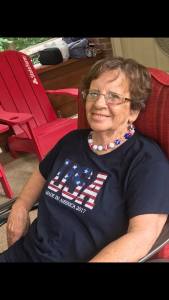
(Stayed tuned Dear Reader. More to come.   K.S.)

Design a site like this with WordPress.com
Get started